
02 Sprint
The brand that got you to product-market fit was probably made in a weekend, and it did its job. The trouble starts when it has to stand next to a Series A deck, an enterprise procurement team, or a competitor with a marketing department.

Sprint isn’t for day one. It’s for the moment after the thing works, when everything around it has to catch up. A short run of workshops, the strategy you need and none you don’t, a market approach you can act on this quarter, and an identity built for where you’re going next: the mark, the type, the colours, the rules that matter and nothing that doesn’t.
Every decision in it points at the goals you've already set: the raise, the first enterprise customers, the market you're moving into. You leave with a brand built to help you get there, one people take seriously on first sight, and one that grows with the company instead of being started over in eighteen months.
This is for you if
- You have product-market fit, and a brand that hasn’t caught up with it.
- You’re heading into a moment that sets the next two years: a raise, a new market, a partner you can’t look small in front of.
- You need to be in the market this quarter, not next year.
- You expect to keep changing, and want a base and a system that can take it.
Highlights of value
Stop looking earlier-stage than you are.
The brand catches up with the traction, so nothing in the room suggests you are further back than your numbers say.
Close the gap between the pitch and the numbers.
What you claim and what the data shows line up, which is the first thing diligence tests.
Compete on criteria you set.
Buyers evaluate you on what you are actually good at, instead of the feature list a competitor put in the market first.

How it runs

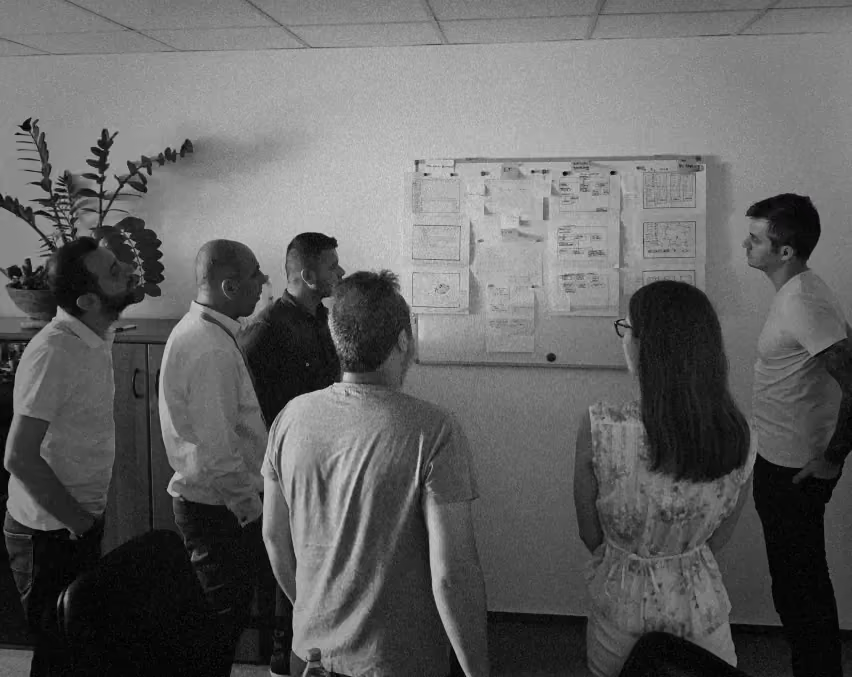
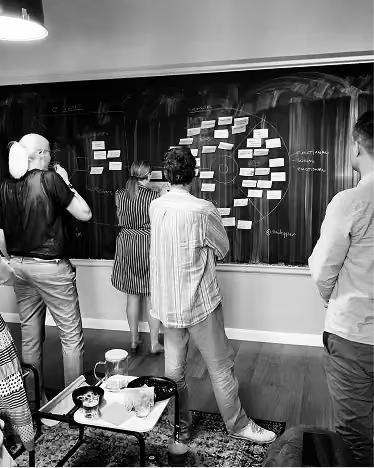
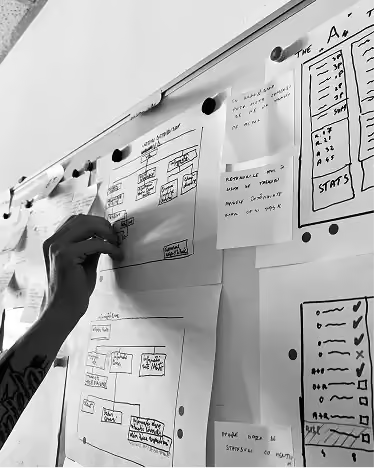
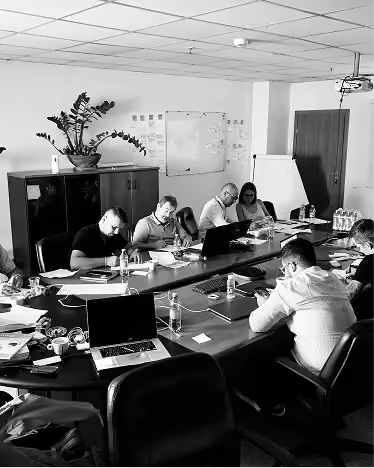
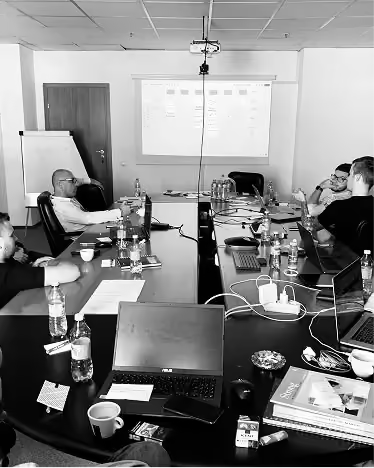
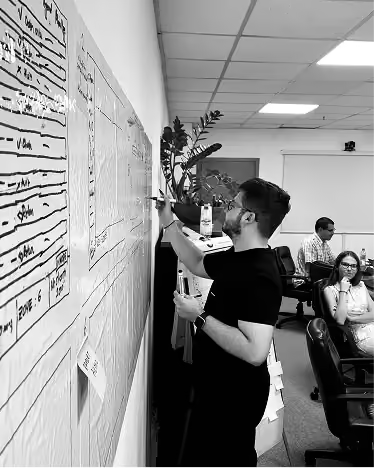
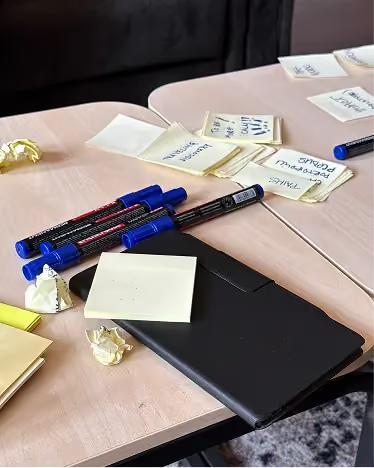
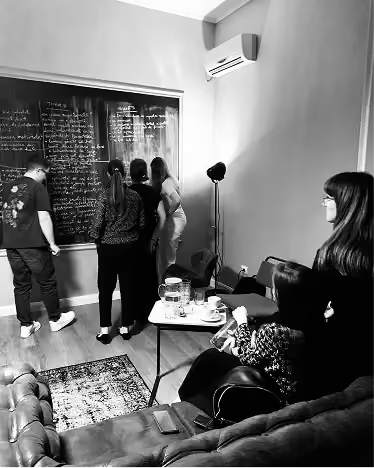
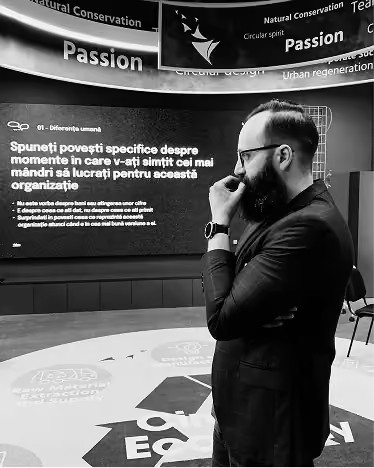
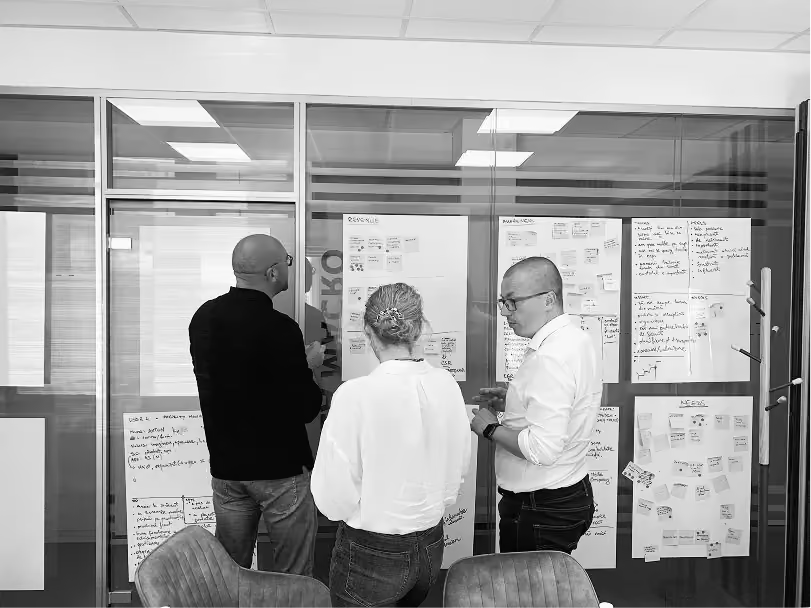
Sprint workshops.
Sessions with the founders in the room, decisions made fast.

Position and market approach.
Who you’re for, what you claim, and where you show up first.

Core identity.
Logo, type, colour, and the handful of rules that hold them together.

Starter kit.
The files and templates you need to actually launch with.

Investor materials.
The deck, the one-pager, and everything else that goes in front of money. Built from the same story, not assembled the night before.

Room to grow.
The few rules that let the brand stretch into the next market or the next raise, so the base holds instead of being started over in eighteen months.
What you leave with
A position and a one-line story you could pitch tomorrow.
A market approach with a first move in it, not a wishlist.
A core identity: logo, type, colour, and the rules that govern them.
Launch-ready files for the deck, social and a clear direction for the website.
An investor deck and one-pager that say the same thing as everything else you put out.
No gap between the company in the deck and the company an investor meets.
At a glance
Best for:
Startups past product-market fit, at the point where the next move is bigger than the brand built to get there.
Who we need:
Founders free for the workshop days. This one is intense on purpose.
Runs:
Four to eight weeks.
Investment:
Based on scope.
The
outcomes
So our core people found a new drive, and carried that back into their own teams. Projects that came after the workshops started with much more momentum and engagement.
We gained further confidence in ourselves and in our people.
Mihaela Sofronea
CMO, Green Group

The whole process was a mirror held up in front of us. It also showed us what we actually do for the community, how much we have in common as a team, weaknesses we could work on. To me the process is the valuable part, beyond the final result.
Claudia Abrudan
Executive Director Fundația Comunitară Oradea
Defining and structuring our company values made it simple to put expectations into words, for the team and for clients, and it became clear who fits with them and who doesn't. To my own surprise it has brought clarity in how I look at our team and company culture. Those of us who stayed, we stick better together.
Istvan Barta
CEO Tracknamic
What really impressed me was the thinking process behind every design decision. Nothing was accidental or unintended. Every element had a reasoning behind it, and most important of all, it all fit together.
Eric Ralls
CEO and Founder, Earth.com
So our core people found a new drive, and carried that back into their own teams. Projects that came after the workshops started with much more momentum and engagement.
We gained further confidence in ourselves and in our people.
Mihaela Sofronea
CMO, Green Group
The whole process was a mirror held up in front of us. It also showed us what we actually do for the community, how much we have in common as a team, weaknesses we could work on. To me the process is the valuable part, beyond the final result.
Claudia Abrudan
Executive Director Fundația Comunitară Oradea
Defining and structuring our company values made it simple to put expectations into words, for the team and for clients, and it became clear who fits with them and who doesn't. To my own surprise it has brought clarity in how I look at our team and company culture. Those of us who stayed, we stick better together.
Istvan Barta
CEO Tracknamic
What really impressed me was the thinking process behind every design decision. Nothing was accidental or unintended. Every element had a reasoning behind it, and most important of all, it all fit together.
Eric Ralls
CEO and Founder, Earth.com
Built for what's next.
A raise, a new market, a room you can't afford to look small in. If one of those is coming, Sprint gets the brand there in time. Tell us what you're heading into.