Crama Corbuț
A winery that lets the wine do the talking.
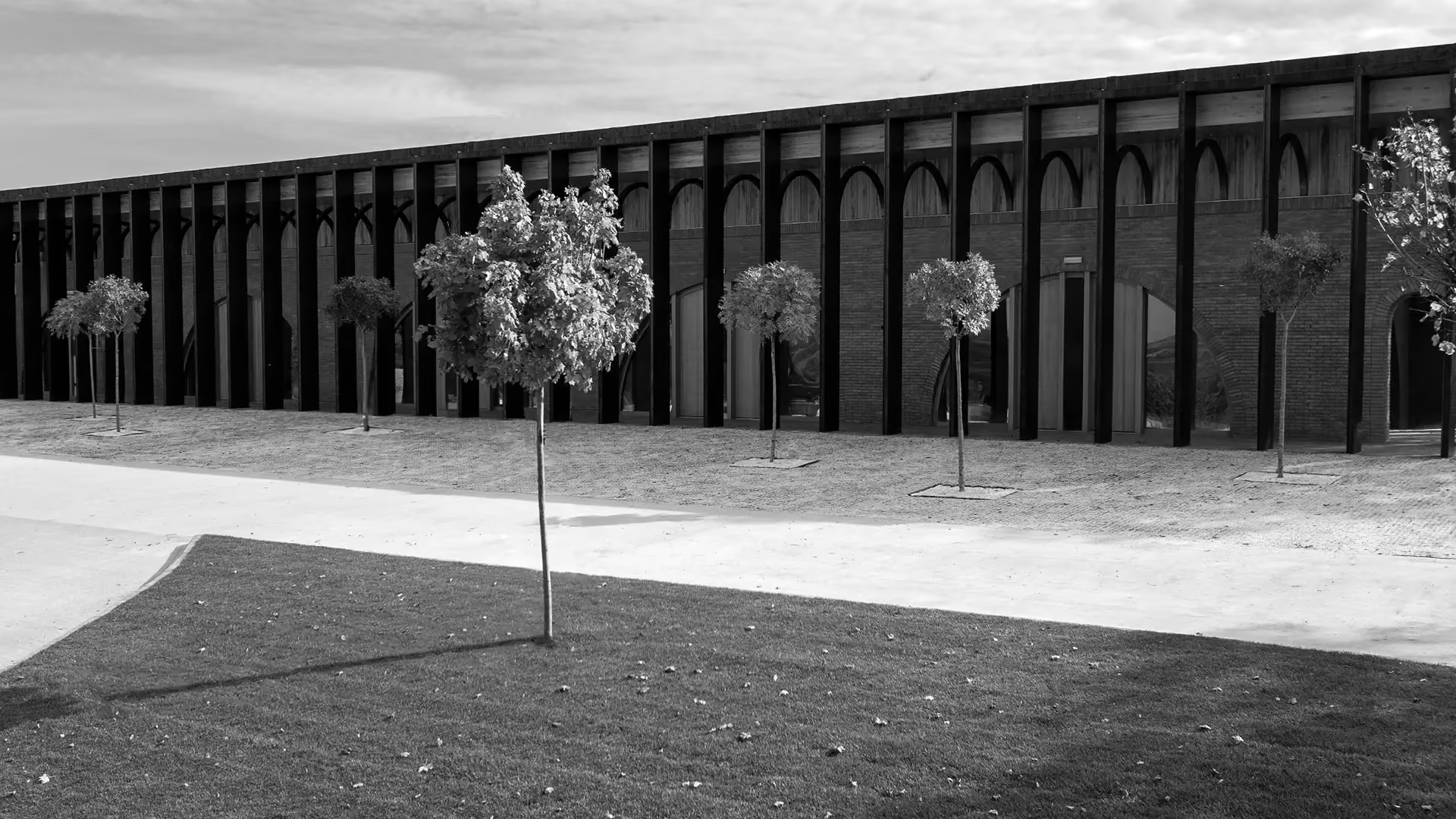
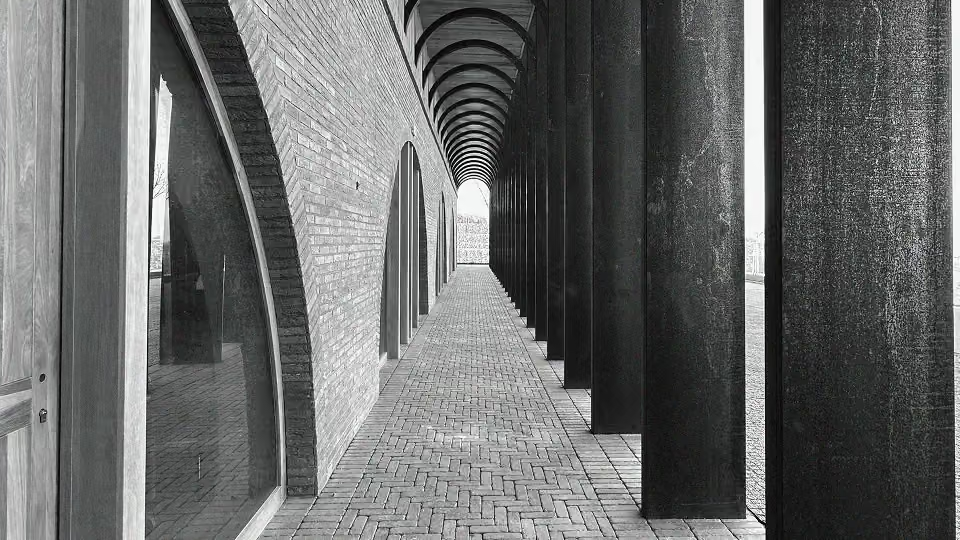
Corbuț had a story to tell and a clear idea of how to tell it, but told the usual way it sounded like every other winery. We found the one thread underneath, and built the strategy, the naming and the identity around it. Crama Corbuț. Diosig, Romania.
What we did
The real question
History of the place, the family, tradition passed down. Almost every small winery tells the same story, and told the usual way it stops meaning anything. Corbuț had a real claim to all of it. The harder question is where the story actually lives, once the words everyone uses are spent.
Starting point
They came with a story, not a problem
Dan and Raul Corbuț arrived with a winery they were proud of and a wish to build something that was only theirs. Doing things your own way is a family trait, passed down like everything else. They had almost too much to say, and no single way to say it.
"For Corbuț Winery, wine is not the story. It is the storyteller."
How we thought about it
The answer was already in their own words
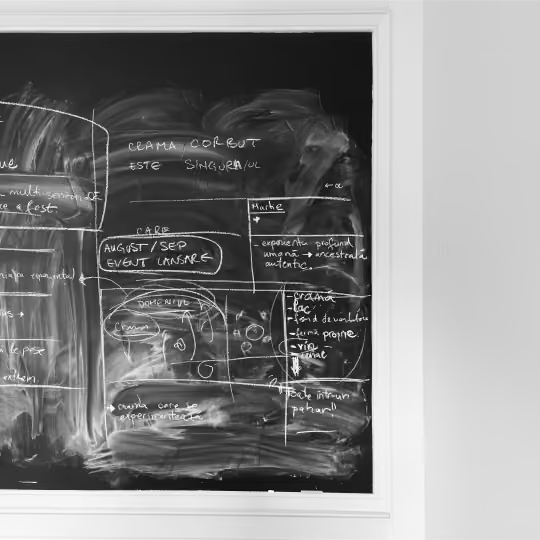
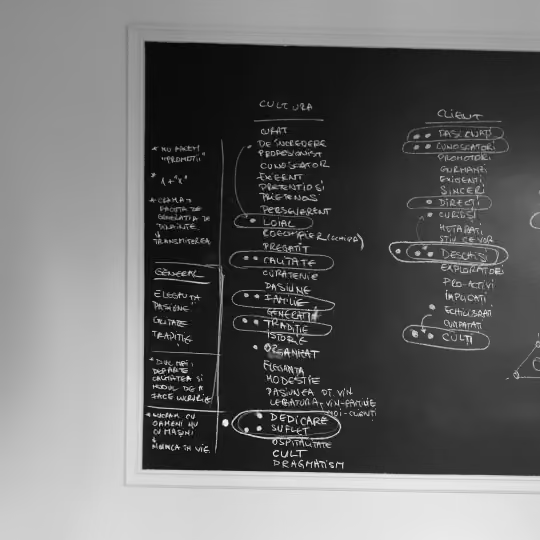
We didn't hand the family a direction. We looked for the one they already believed, quieter than everything stacked on top of it. It was in their own strategy, in a single sentence, and once we found it everything else fell into place.
The decision
We let the wine carry the story
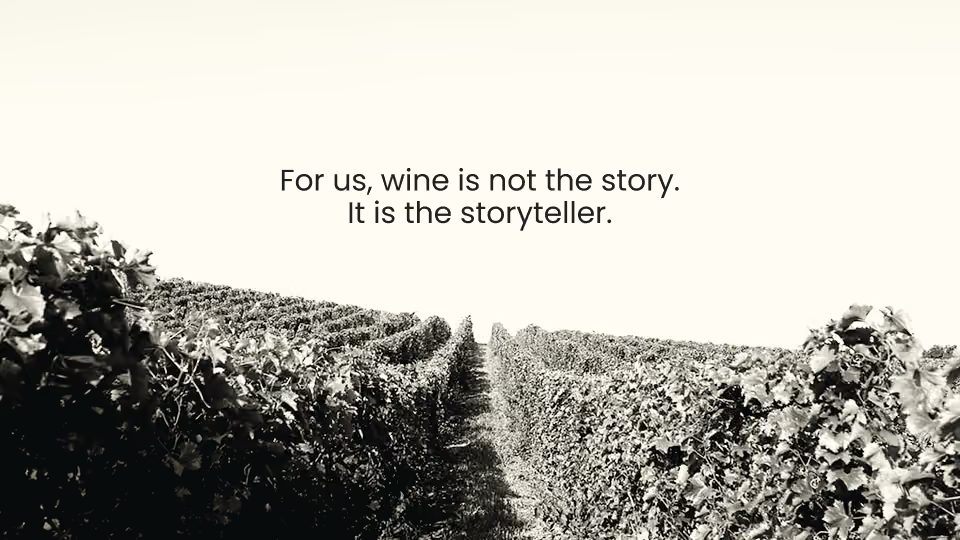
For us, wine is not the story. It is the storyteller.
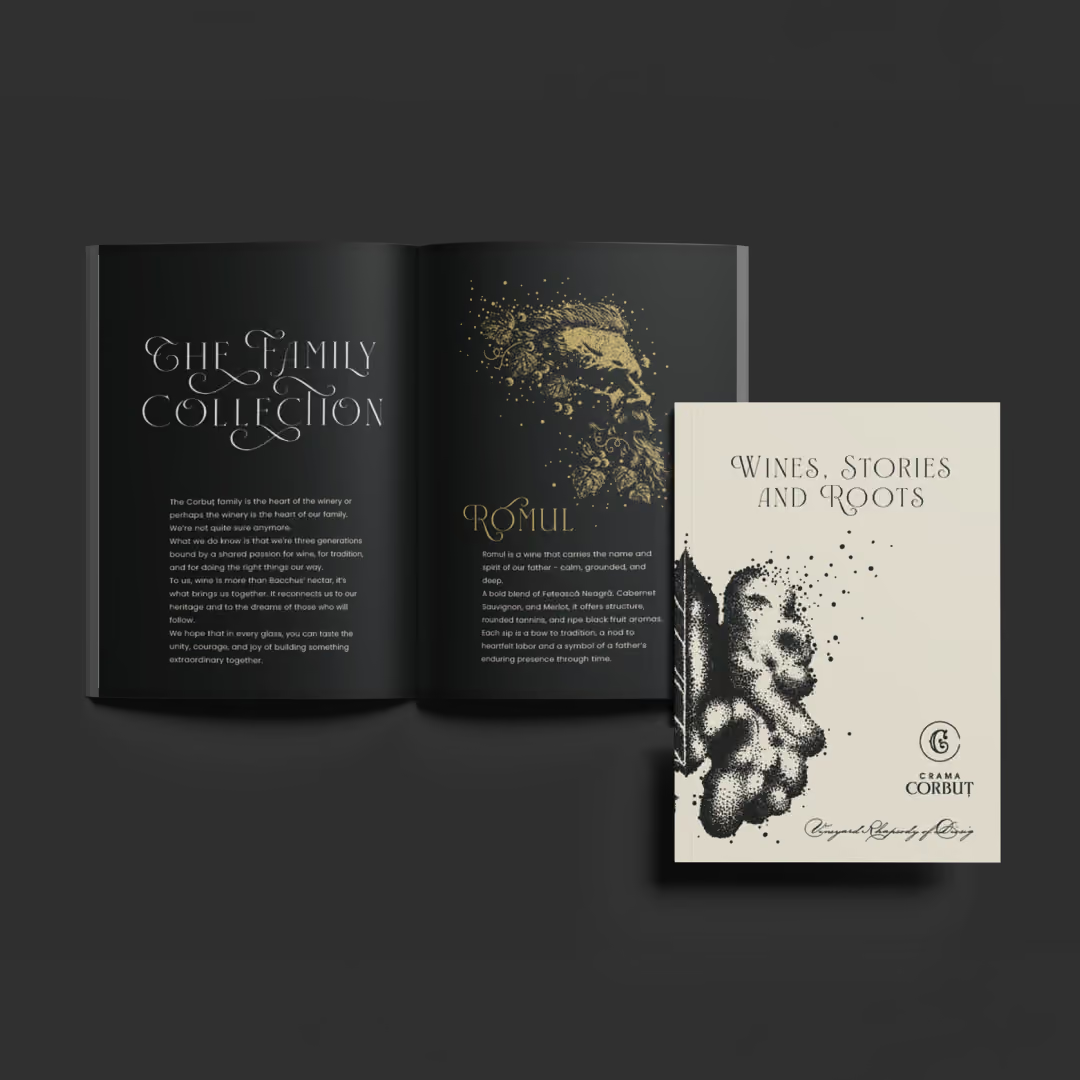
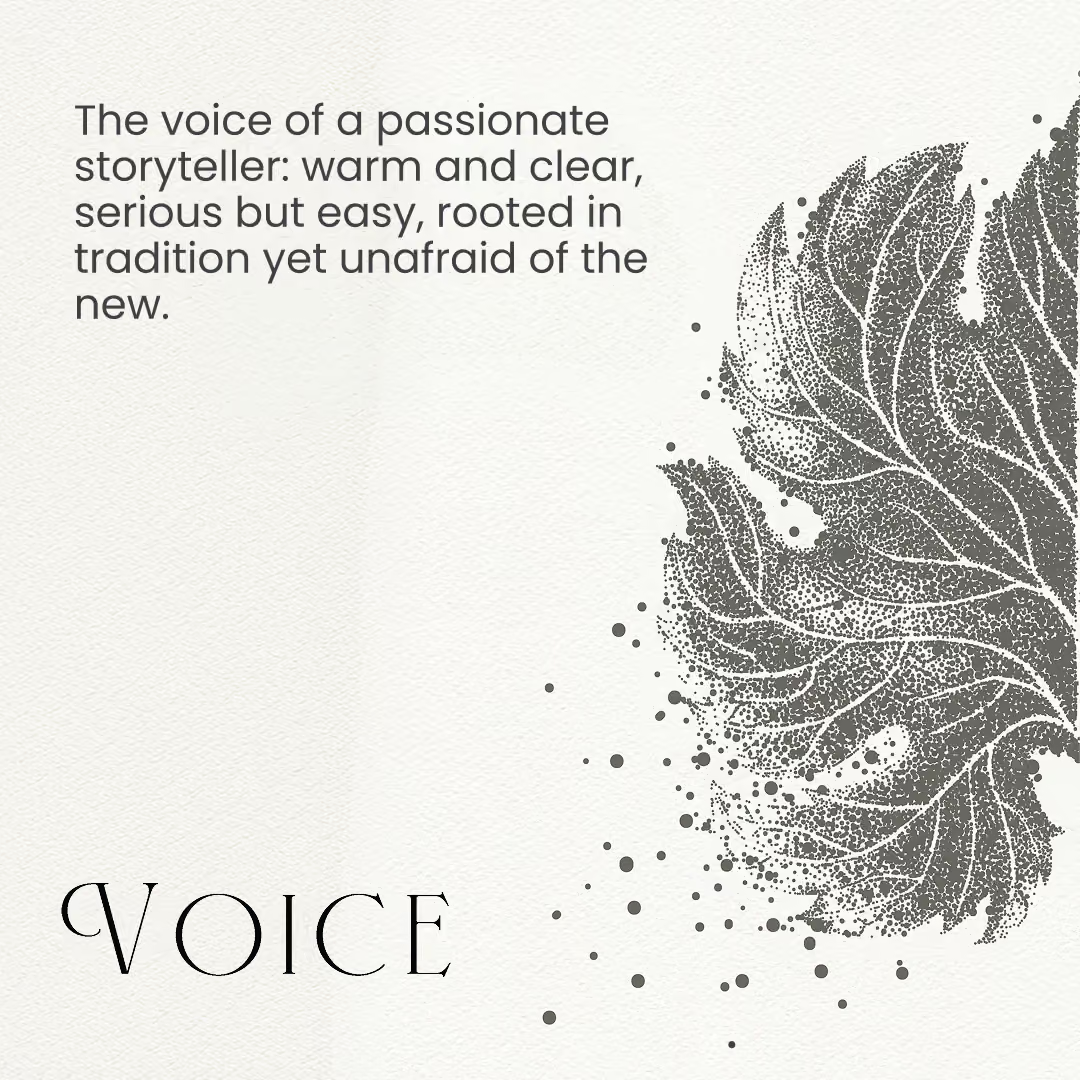
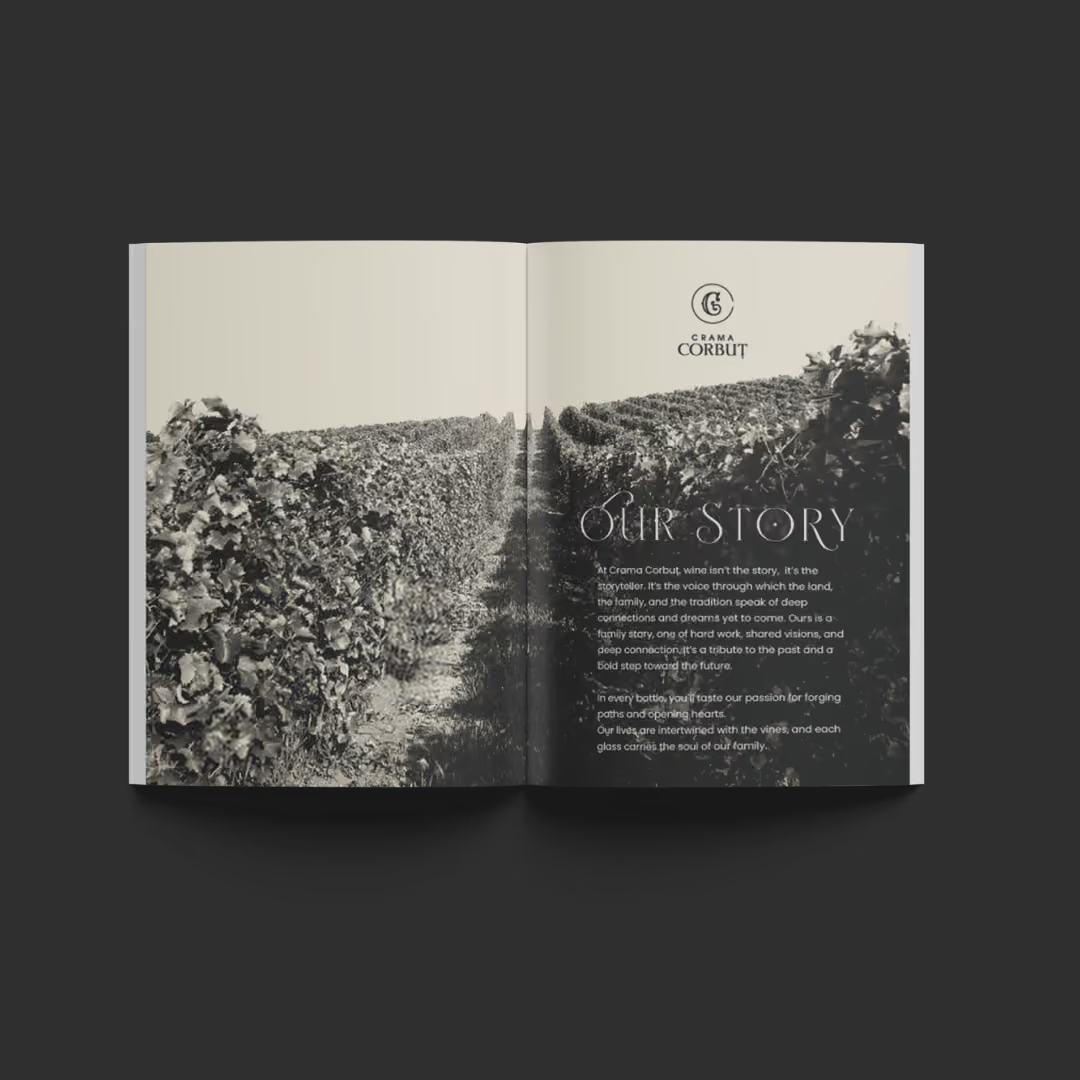
If the wine narrates, the brand becomes the page the story is printed on. It carries the voice, so the identity went quiet and editorial: black and white, made to be read.
Evidence · the work
One idea, across three ranges
The same idea runs through three ranges, each speaking for a different part of it. The core range speaks for the place. The single varietals speak for the vineyard. The family wines speak for the people who carry it forward. One story, three registers.
One story, told three ways, and still unmistakably theirs.
The identity was built to the same brief. More than a logo, it's the system a winery runs on: the mark, the rules, the assets its team uses every week. Built out of the strategy, so everything it makes reads as one winery.
core
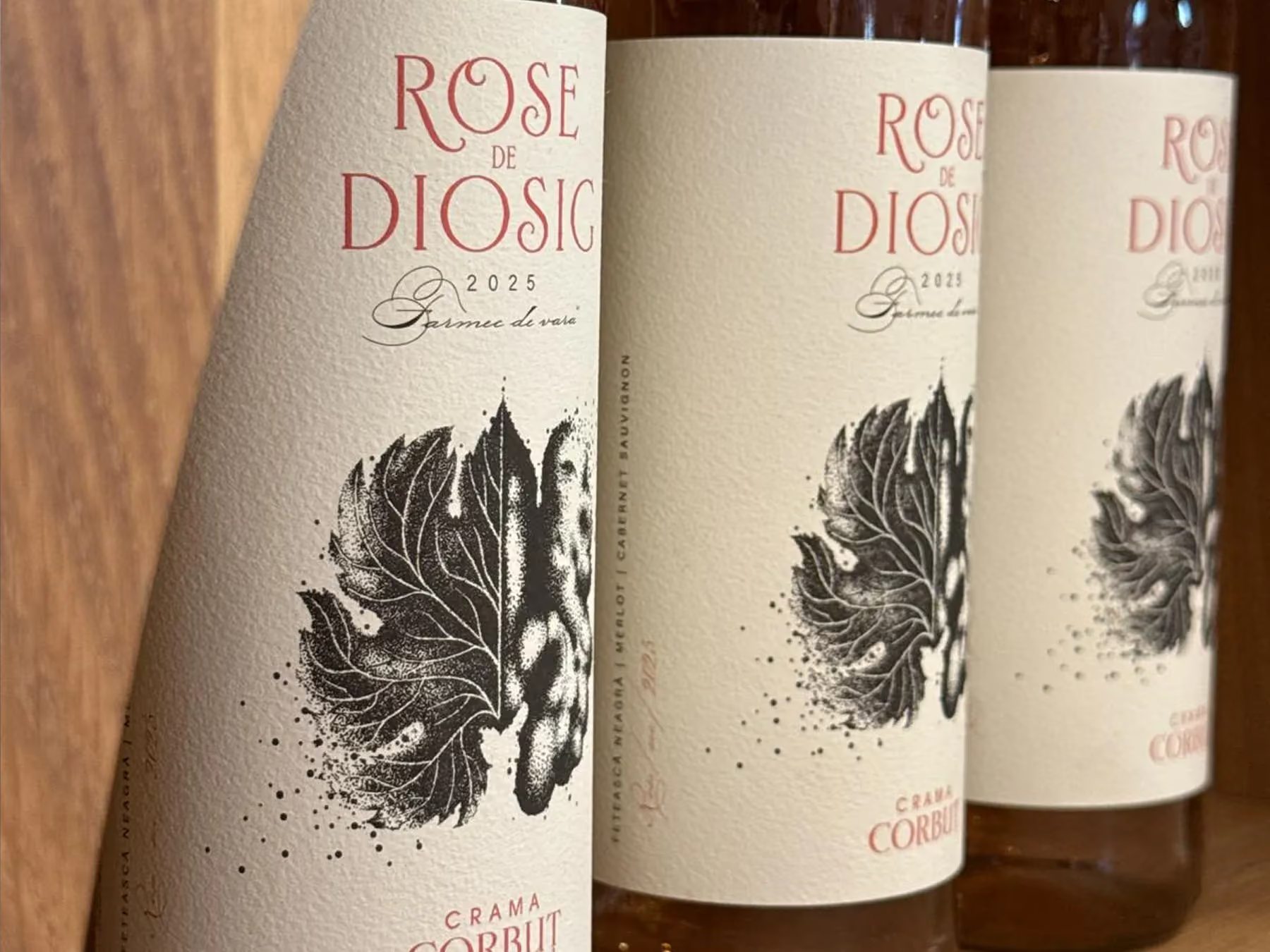
The core range, rooted in Diosig
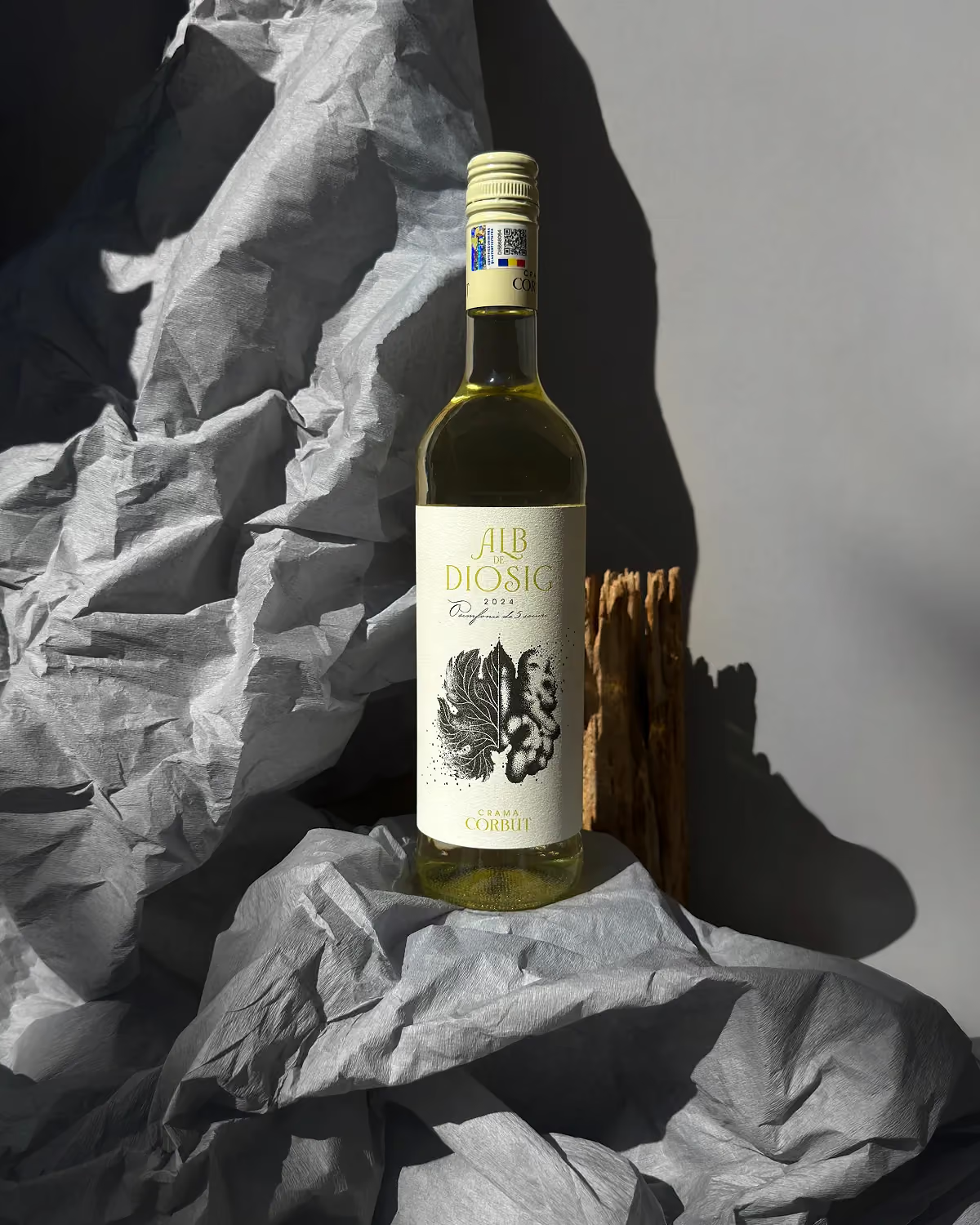
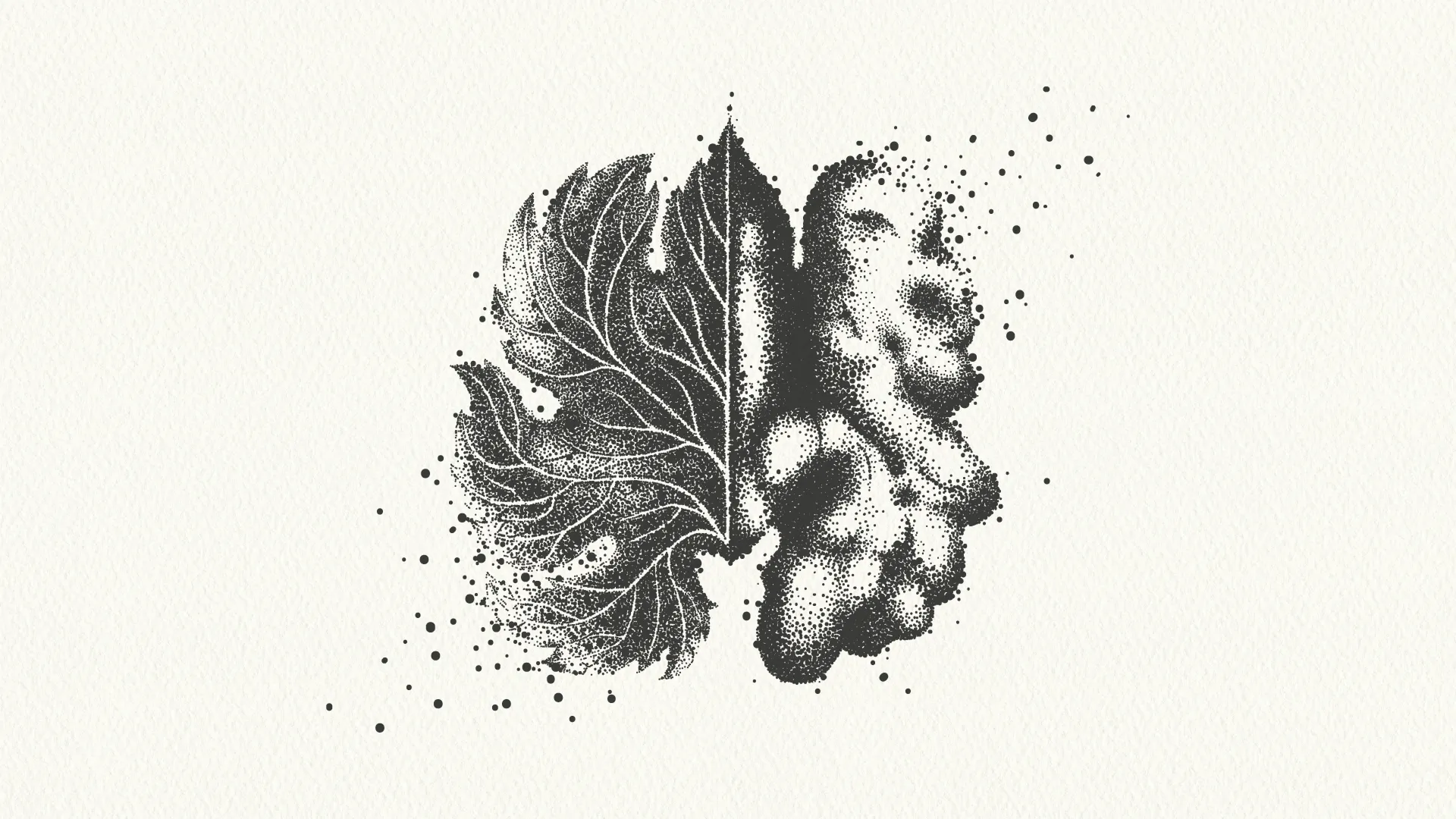
The core range belongs to Diosig, a place once known for its walnut groves and its vines. Its label carries both: half a walnut and a vine leaf, side by side. The everyday wines start where the whole story does, in the ground.
The vineyard wrote the first draft. We listened, and kept what mattered.
The label we recorded instead of designing it
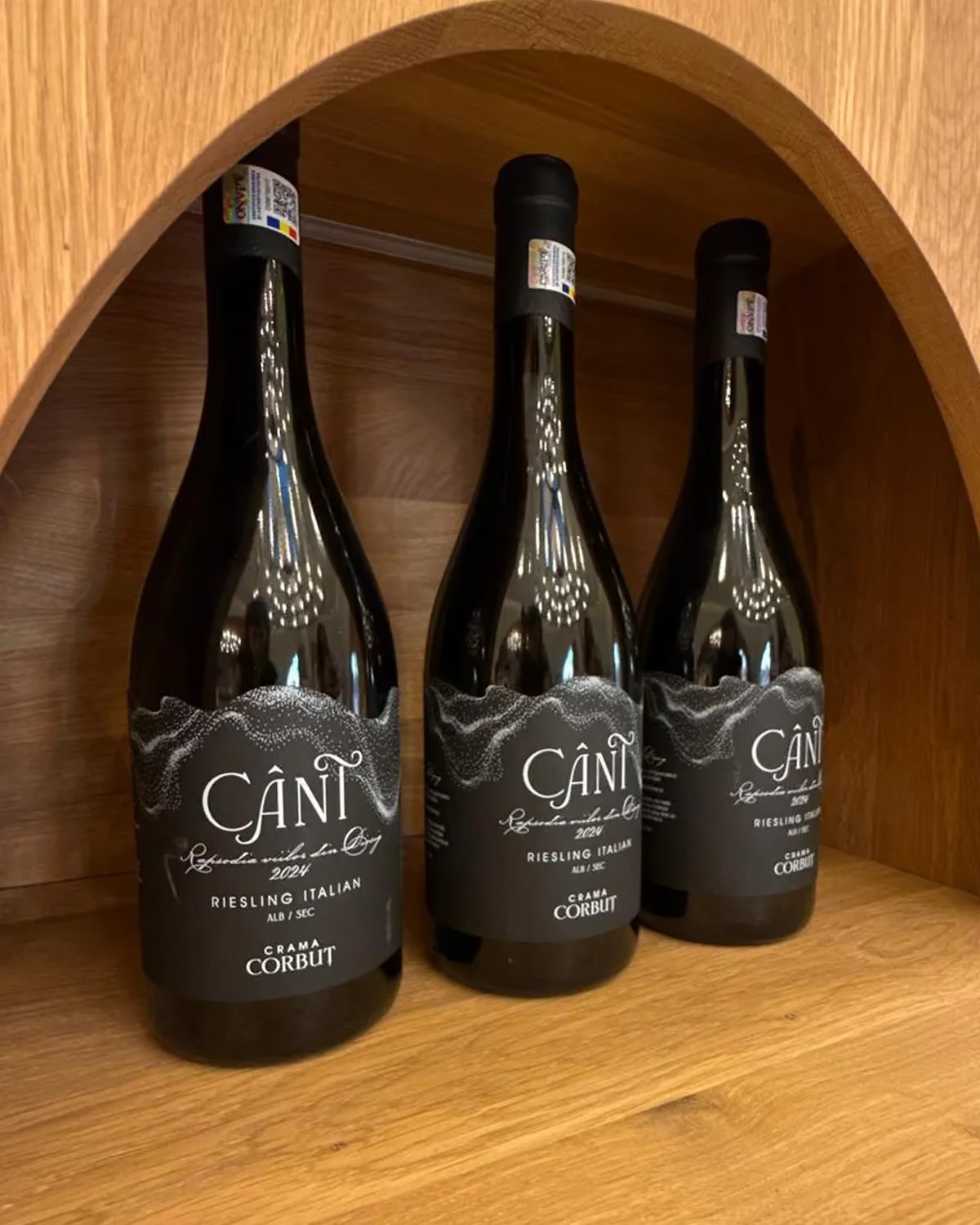
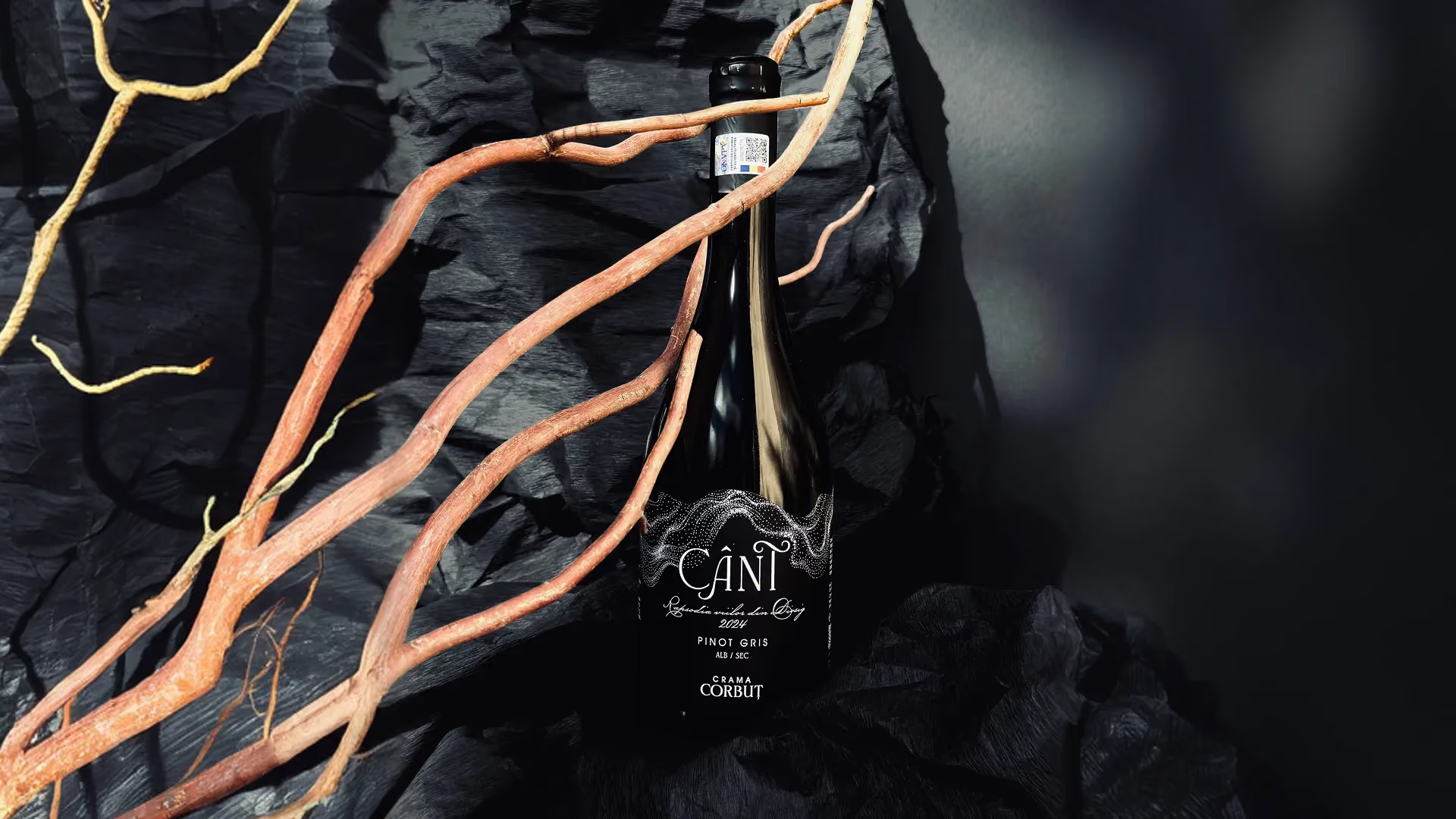
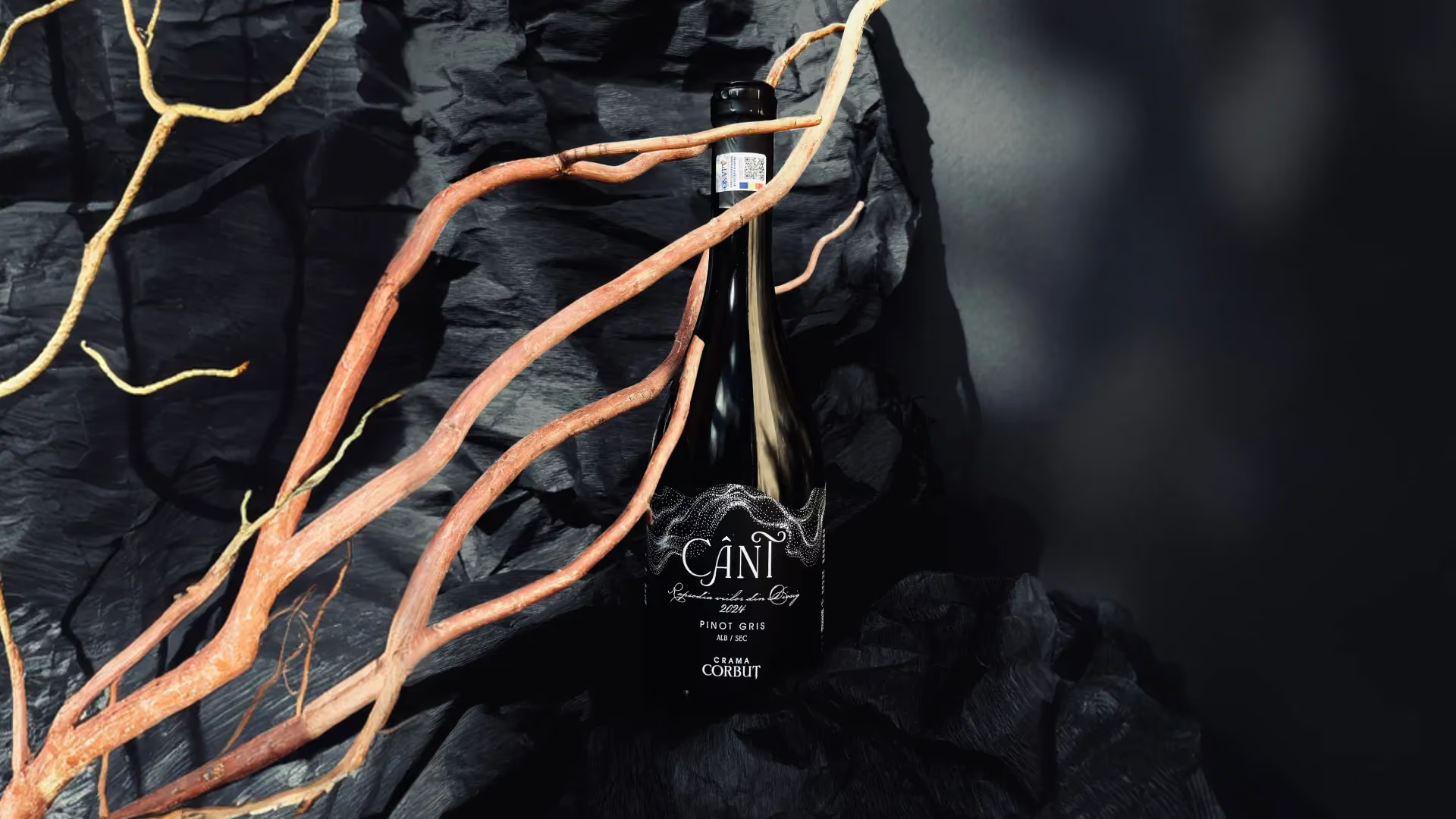
Cânt means song. The name is literal
Cânt needed a label that was the wine speaking, not decoration. With Plantwave, a device that turns a living plant's signals into sound, we recorded the vines at Diosig and made their rhythm into music. Cânt means song. The dots on the label are that recording, made visible.
The vineyard wrote the first draft. We listened, and kept what mattered.
The wines named after the family
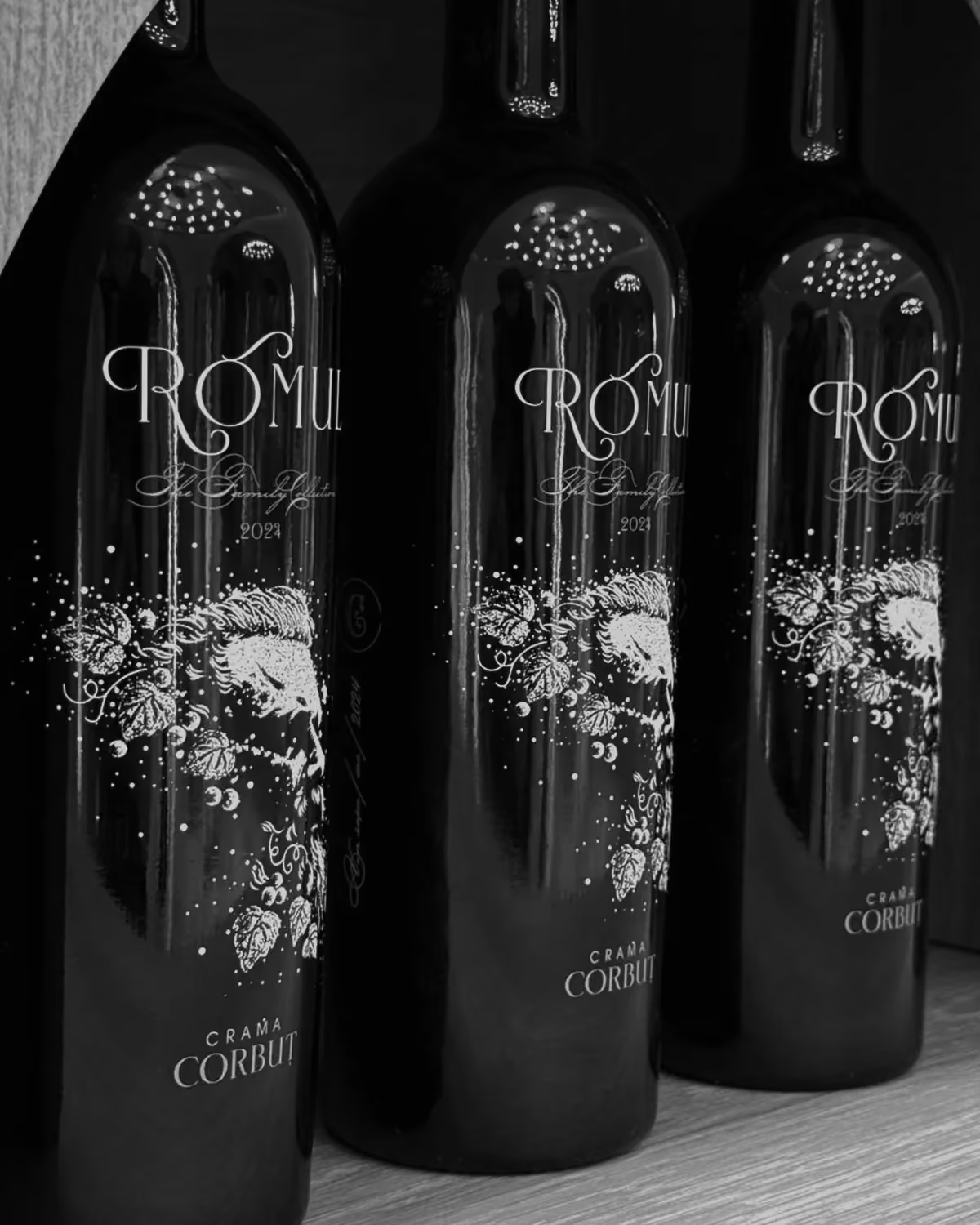
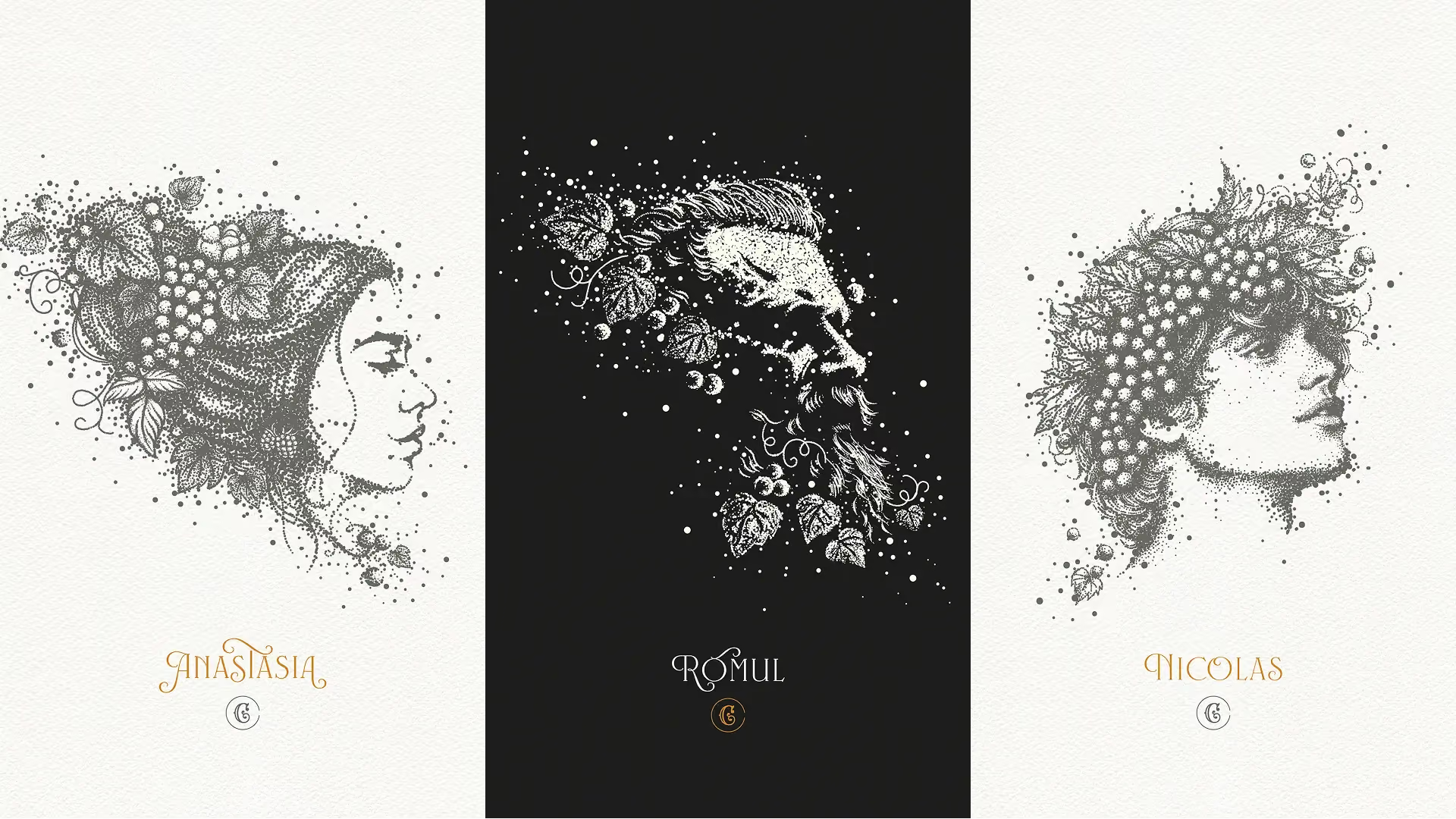
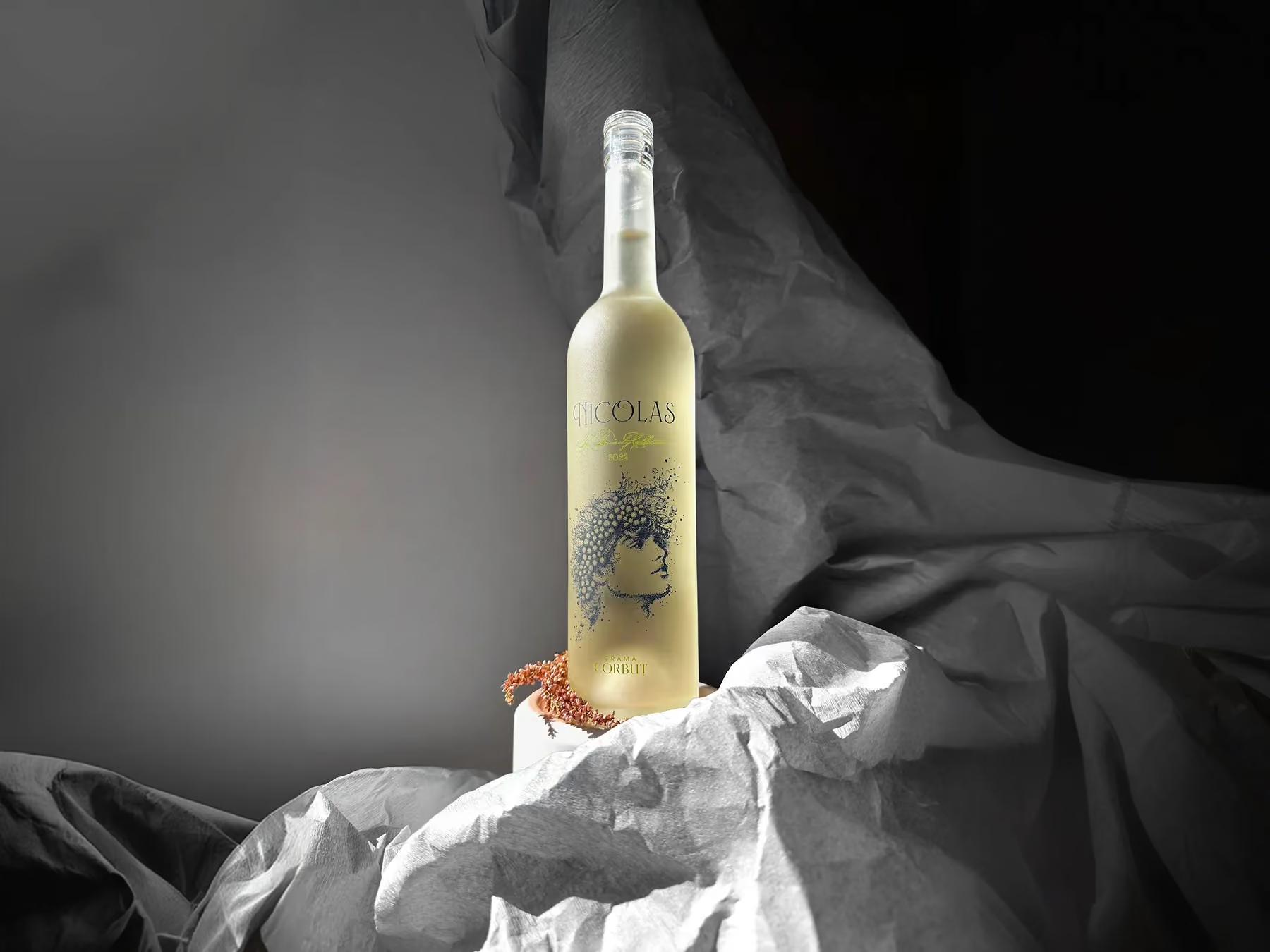
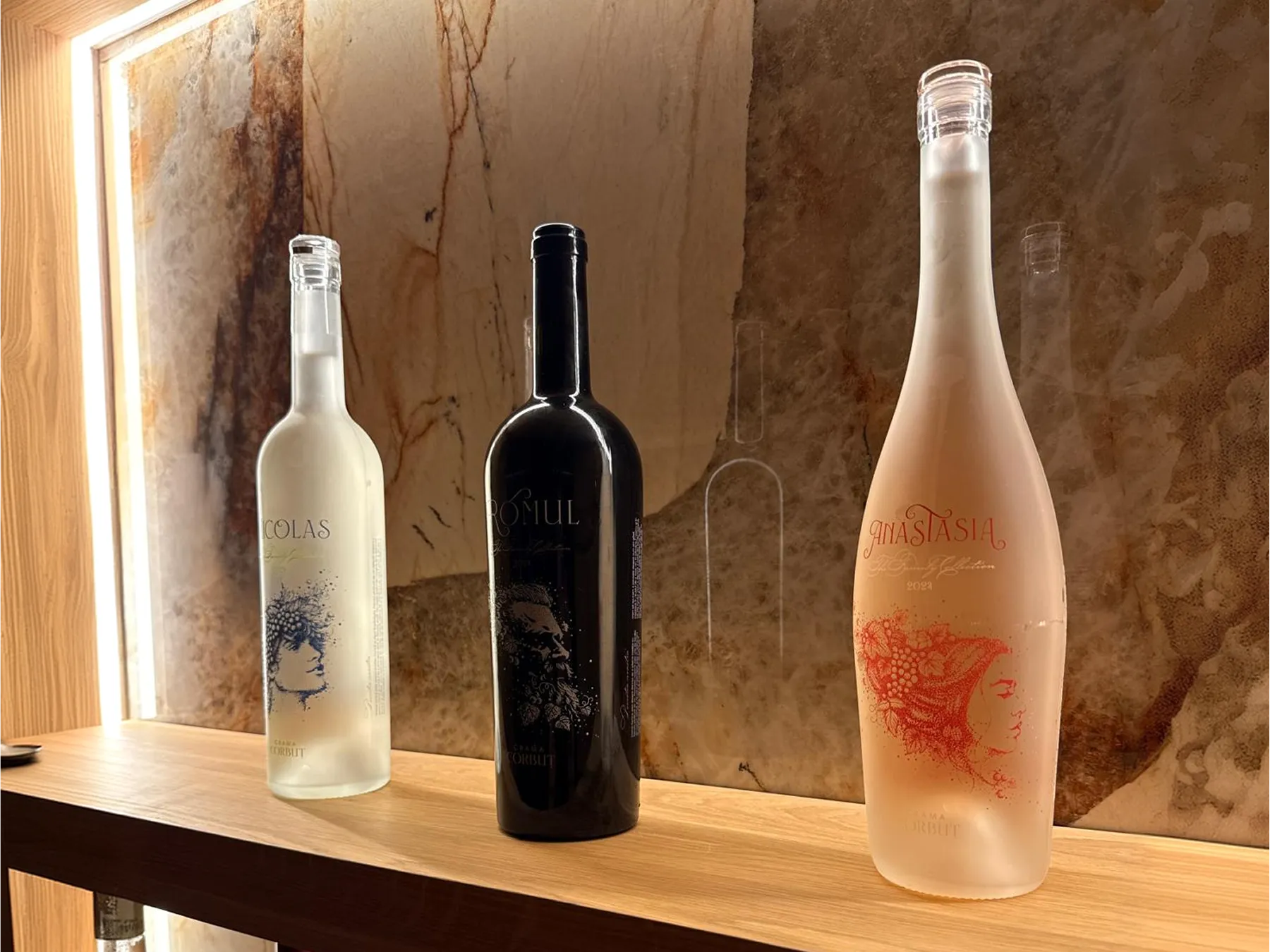
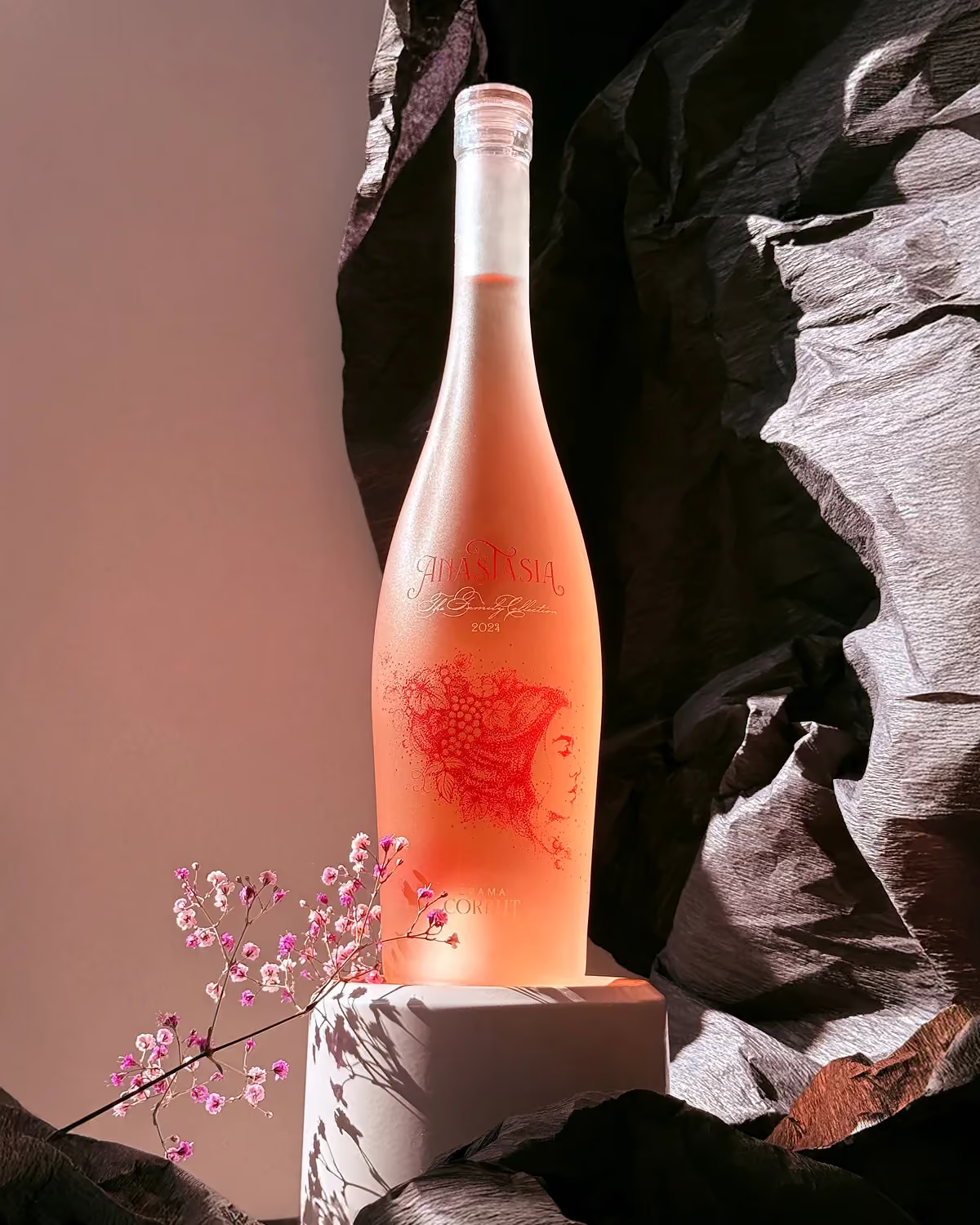
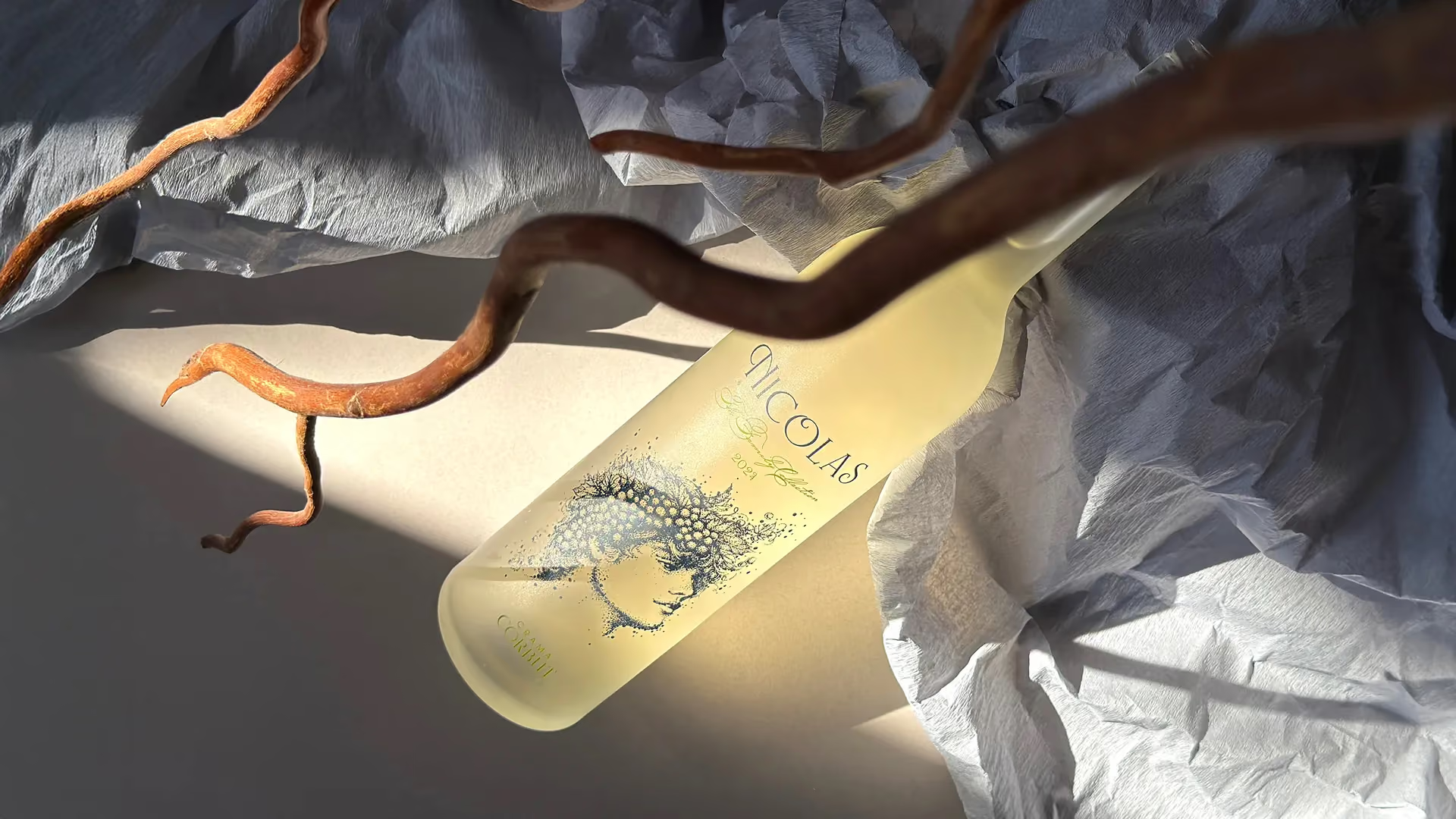
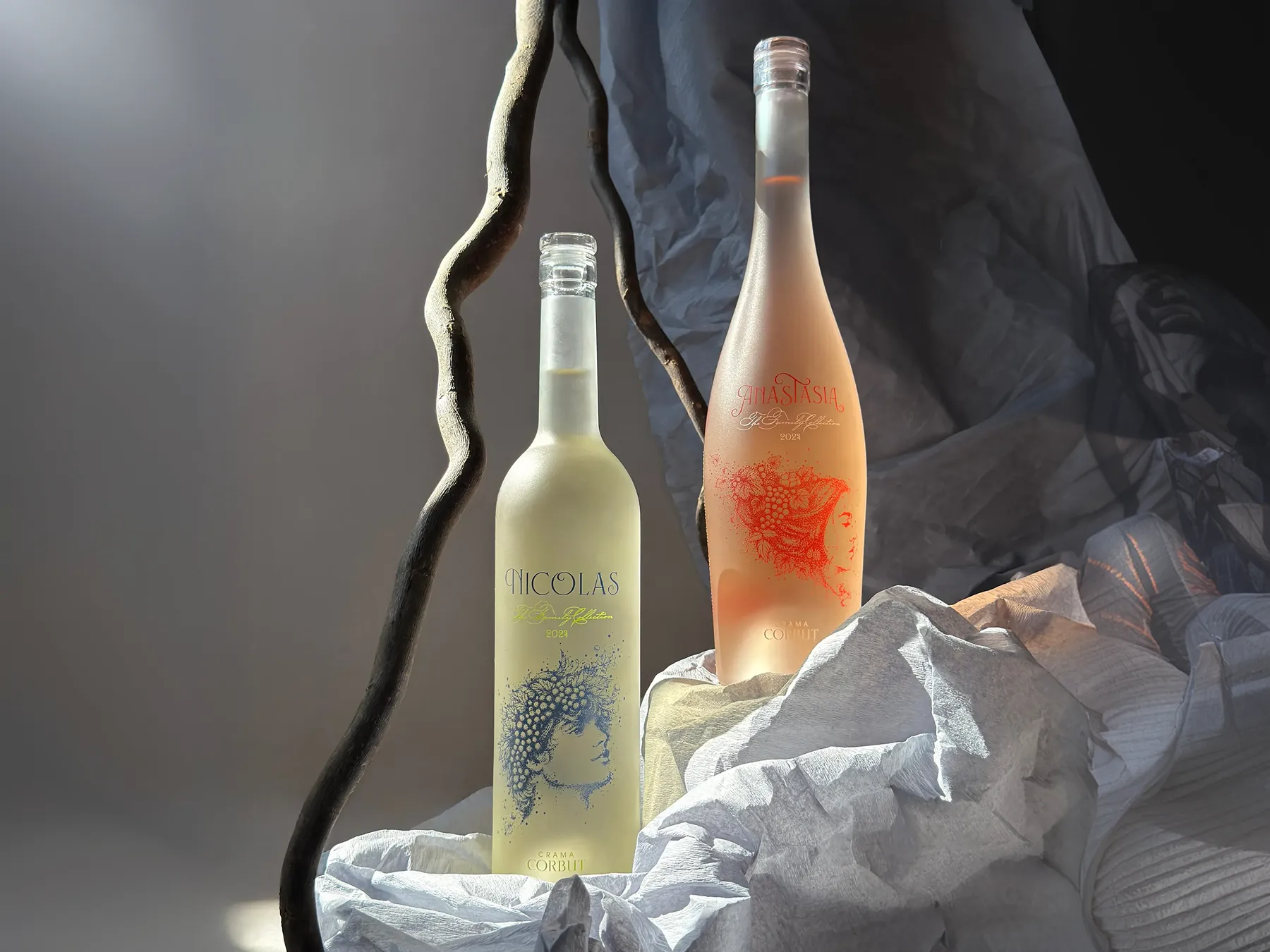
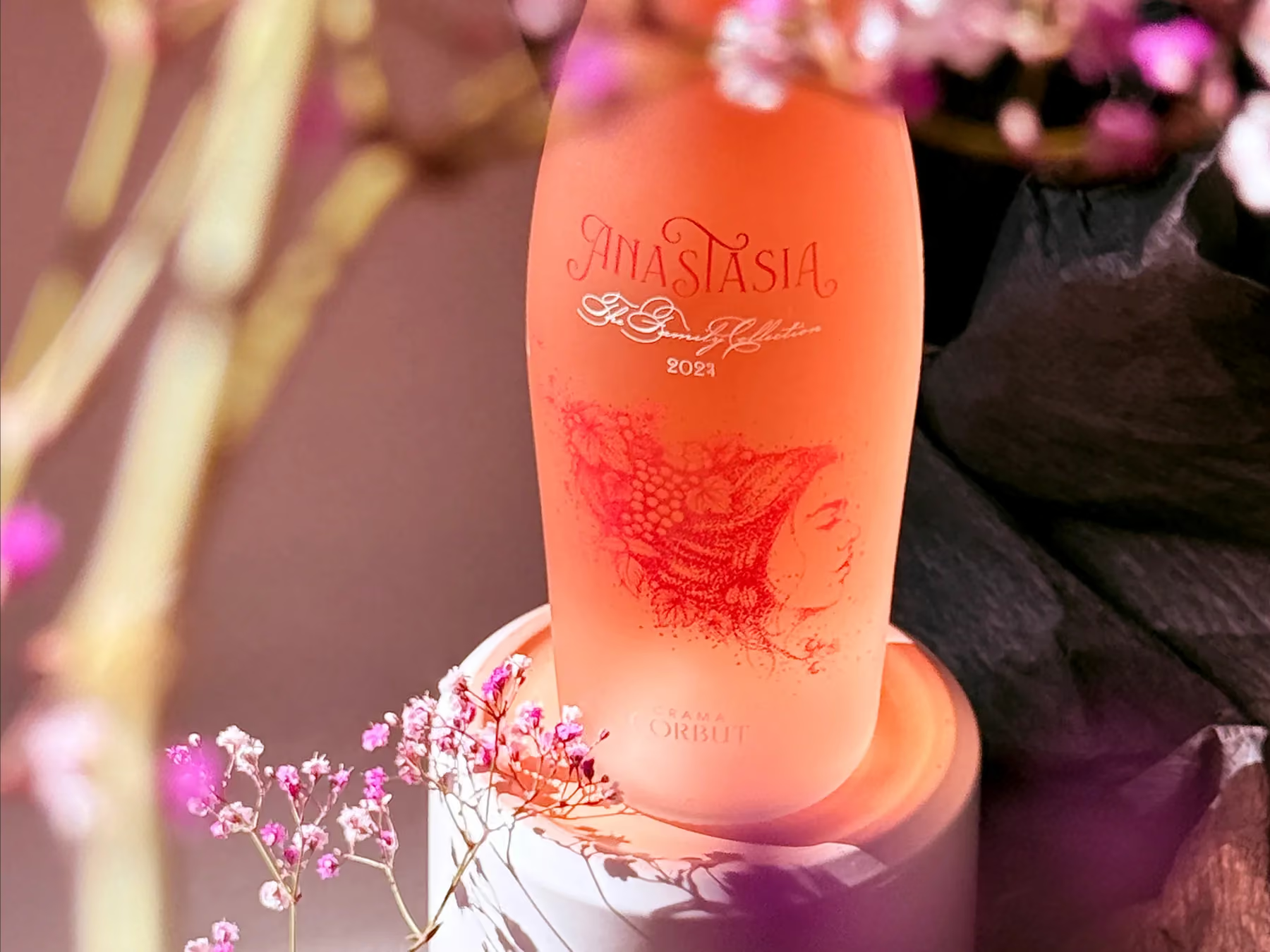
Romul, Anastasia, Nicolas. Three generations.
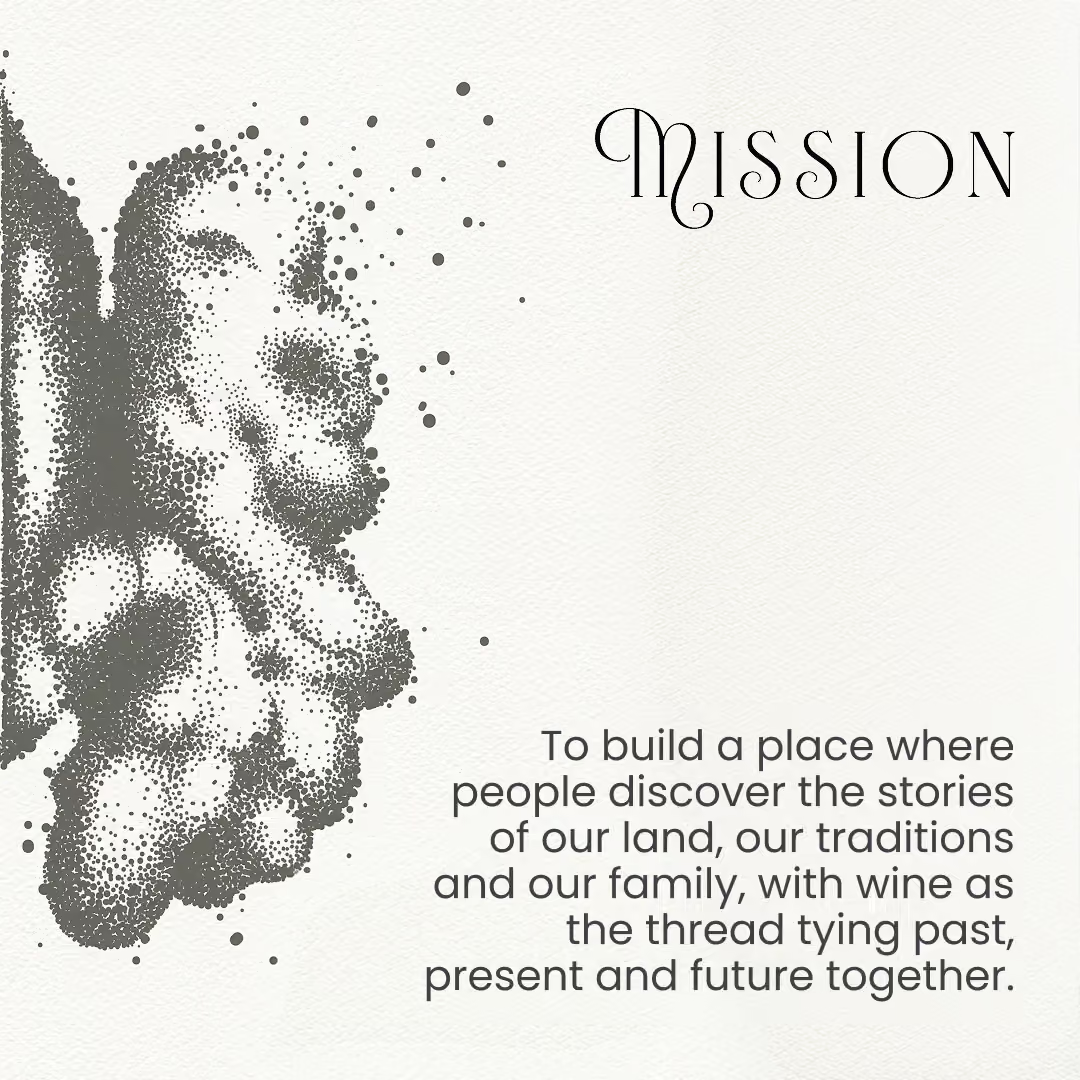
The family wines carry names and faces, not tasting notes. Romul for the father, Anastasia and Nicolas for the niece and nephew. Each portrait is drawn from vine and grape, so a family face still reads as Corbuț rather than as stock.
Closing
It was all there. It just needed saying
Nothing here was invented. The three generations, the vineyard, the belief that a winery is something you leave behind were already there. What is new is a brand grown from the family's own story, clear enough to speak on its own. The winery describes a past. The brand carries it forward.
Share project